






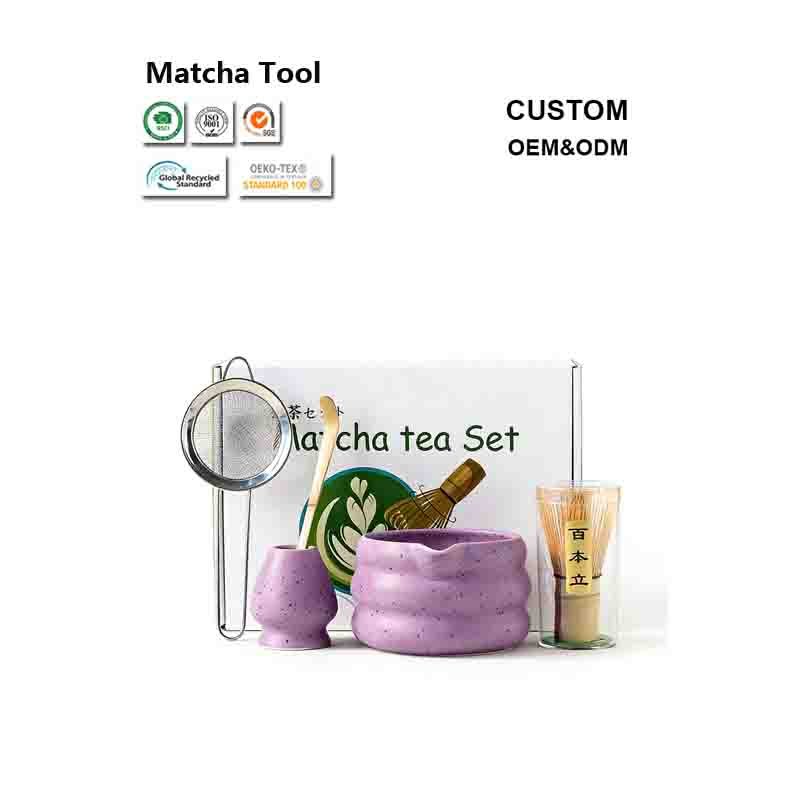
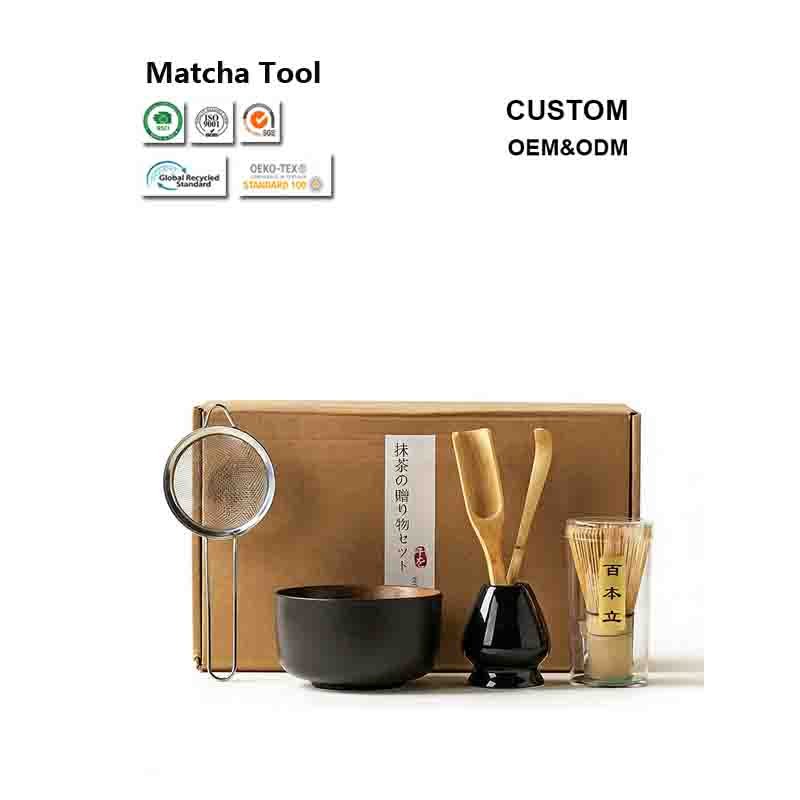

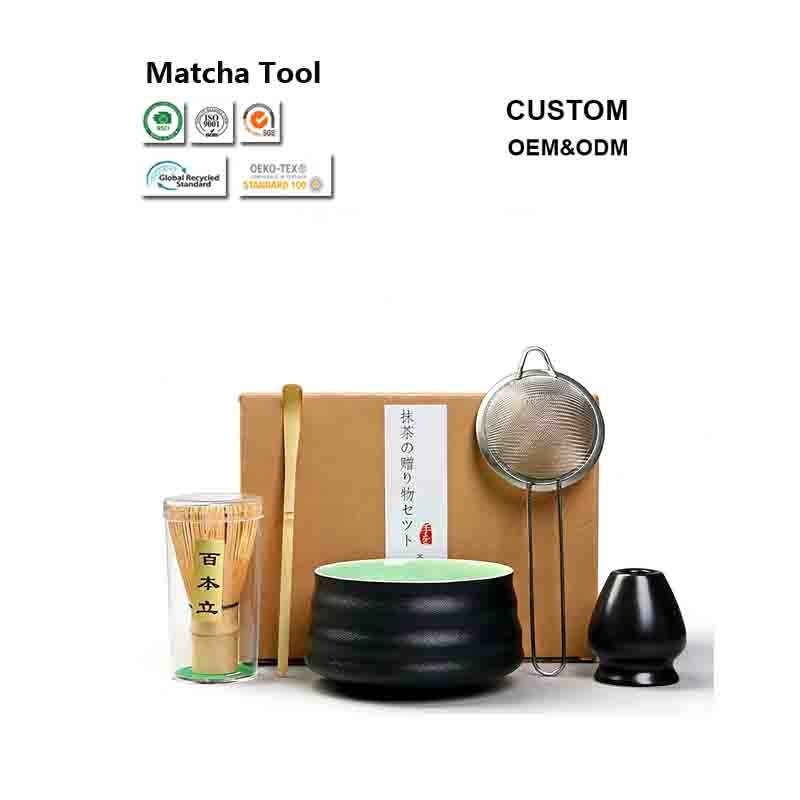
A 450–500 ml matcha bowl with an 11.5–12 cm rim holds its shape only if the wall stays within 2.8–3.2 mm at the foot ring and 2.2–2.5 mm at the lip. Move the lip to 1.8 mm and breakage in transit climbs from 1.4% to 4.1% on a 24-set carton. Rim tolerance of ±0.4 mm keeps the whisk stand seated and the scoop rest level.
Why Wall Thickness Drives Breakage Before Glaze Does
Ceramic failure in a matcha set starts at the thinnest section, not the glaze. A bowl thrown to 2.0 mm at the rim flexes under a 100-prong whisk and chips at the contact point. We hold the rim at 2.2–2.5 mm and the body at 3.0 mm ±0.2 mm, so the bowl absorbs whisk pressure across the curve rather than the lip. Breakage testing on 3 cartons per lot at 1.2 m drop shows the difference: a 2.0 mm rim lot failed at 3 of 60 bowls, a 2.4 mm lot at 0 of 60.

Rim Tolerance and How It Changes the Whisk Stand Fit
The whisk stand is moulded to a 60 mm opening with a 1.5 mm seat lip. If the bowl rim runs to 12.3 cm instead of 12.0 cm, the stand rocks and the whisk tips contact the bowl floor. We measure rim diameter at 4 points per bowl with a digital caliper and log every reading. Tolerance is ±0.4 mm on diameter and ±0.3 mm on rim height. A lot drifting past ±0.6 mm is re-fired and re-checked before packing.
Foot Ring Thickness and Carton Drop Performance
A foot ring at 4.5 mm carries the loaded bowl through a 20–24 set carton at 0.05–0.06 cbm. Below 3.8 mm, the foot cracks on the second drop. We keep the foot at 4.2–4.8 mm and the base at 6.0 mm, which holds the 450–500 ml body stable on the whisk mat. Carton drop testing follows ISTA 3A on 2 cartons per lot.
Glaze Build at the Curve: 0.25–0.35 mm and Why It Matters
Glaze at the interior curve runs 0.25–0.35 mm. A 0.45 mm layer at the curve crazes within 40 thermal cycles; a 0.20 mm layer feels rough to the 80-prong whisk. We spray the interior in 2 passes and polish the curve by hand. The matte exterior, satin interior split finish adds about 0.15 USD per set at 1,000 pcs and does not change the wall spec.
Prong Count, Bowl Depth and the Whisk Contact Line
An 80-prong whisk suits daily use; 100 prongs suit ceremonial preparation. Both need a bowl depth of 68–72 mm so the prongs clear the floor by 3–5 mm at rest. A bowl at 62 mm depth forces the whisk to bend 8 degrees more, which loads the rim. We match bowl depth to prong length per order and record the pairing on the packing list.
- Bowl: 450–500 ml, rim 11.5–12 cm, depth 68–72 mm
- Wall: 2.2–2.5 mm rim, 3.0 mm body, 4.2–4.8 mm foot
- Glaze: 0.25–0.35 mm interior curve
- Whisk: 80 or 100 prongs, matched to bowl depth
- Kit: bowl, whisk, scoop, whisk stand; scoop rest optional
Sampling the Wall Spec: 10–12 Days and What Gets Measured
Sampling takes 10–12 days and covers the whisk specification as well as the bowl. Each sample ships with a measurement sheet listing rim diameter at 4 points, wall thickness at 3 heights, foot ring, glaze build and bowl depth. MOQ is 300 sets for a gift-box configuration and 500 for a full kit with stand. A 3 mm outer sleeve for e-commerce raises carton volume by about 12% and holds transit damage below 1%. Lead time is 28–32 days after sample approval.

Holding the Wall and Rim Standard Across Repeat Lots
The approved standard is held for 24 months, so a repeat order matches the first shipment in shade, capacity and weight. Every lot ships with a packing list stating carton dimensions and gross weight, and FDA and EU food contact reports are issued per lot. A lot that drifts 0.5 mm on rim diameter is flagged at incoming inspection and re-measured before it reaches the carton line.
Size and colour options sit on the ceramic mug category page, and the firing and glazing steps behind these numbers are described in the manufacturing process walkthrough.