






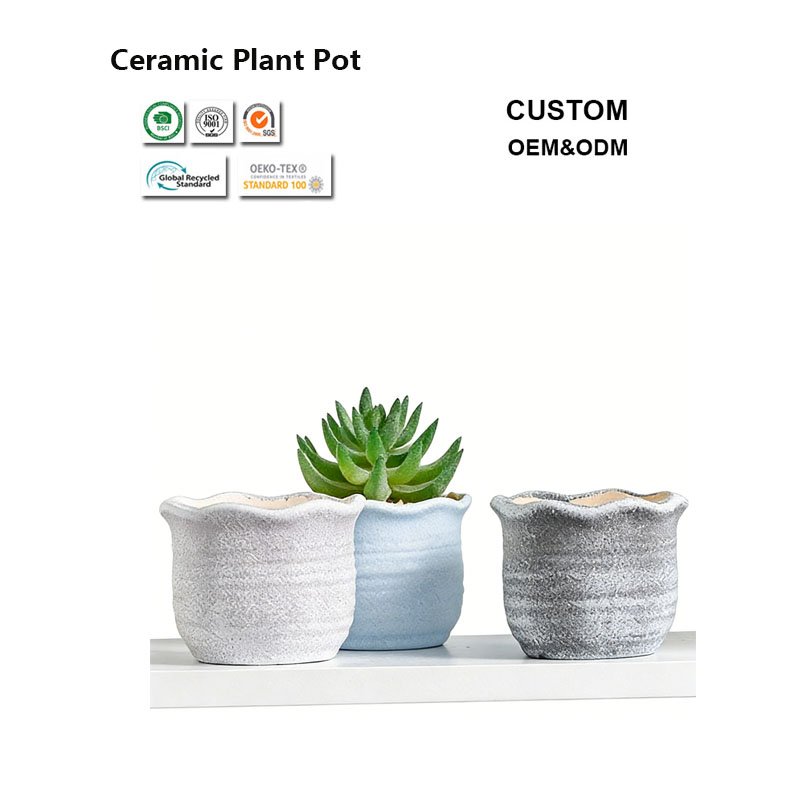
Every wholesale indoor plant pots order from COMAIN ships with a lot file: packing list with carton dimensions and gross weight, fired shrinkage record, and a retained approved standard held for 24 months. MOQ is 300–500 pcs per size and finish, lead time 30–38 days, and the reference price is 8.80 USD per unit. The paperwork travels with the goods, not after them.
What the carton label and packing list actually state
Each lot is labelled by lot number, kiln load date, size, finish and fired shade batch. The packing list repeats those fields and adds carton dimensions and gross weight per carton, so a receiving dock can weigh a pallet against the document before opening it. Cartons hold 1 pc at 22 cm and above, 4 pcs with dividers below. Breakage allowance is 2% on moulded lines and 2.5% where hand finishing varies the rim profile; a claim is raised against the lot number, not the invoice date.

Why pots and saucers carry the same kiln load number
Shade is the specification on hotel planters, and shade is set by the kiln load. Pots and saucers fired in separate loads drift apart in colour even from one glaze recipe, so COMAIN fires the matched saucer in the same load as its pot and records that load number on both the carton label and the packing list. A buyer replacing 100 pieces three years later can quote the load number and the retained standard rather than a photograph.
Which measurements are written down per lot
- Diameter band: 8–40 cm across the range
- Wall thickness: 7–12 mm depending on size
- Drainage: single 12 mm hole on large sizes, three 8 mm holes on small
- Fired shrinkage figure from the 12–15 day sampling run
- Capacity and unit weight of the retained approved piece
These figures are recorded at sampling and re-checked at 3 points in the run: first-off, mid-load and last-off. A repeat order is matched to the retained standard on shade, capacity and weight, which is why the standard is kept for 24 months.
Decal, base stamp and sleeve: what appears in the file
Logos go on by fired decal, embossed base stamp or printed kraft sleeve. Whichever route is chosen, the artwork version and its position are entered on the lot record, so a second run does not reopen the artwork question. Indoor and outdoor versions share shapes but differ in firing and absorption targets; the file states which target was fired, so a buyer running both ranges does not receive the wrong body by accident.
How a shipment is packed and tested before it leaves
Saucers nest inside the pots where possible, cutting roughly 20% of carton volume, and that saving is shown on the packing list as a reduced carton dimension. A drop test is run on the packed carton before the lot is released, and the result is filed with the lot number. Food contact reports for FDA and EU files are issued per lot for orders, so the report a buyer holds matches the pots in their storeroom rather than a generic certificate.
Repeat order handling against the 24-month standard
A repeat order is quoted against the original lot number and the retained standard. COMAIN checks shade, capacity and weight against the stored piece before the new run is scheduled, and notes any deviation on the new packing list. With MOQ at 300 pcs for hand-finished lines and 500 pcs for moulded sizes, a hotel refurbishment can be split across stages while every stage still traces to the same approved standard and the same 8.80 USD reference.

What to ask for when the container is opened
Ask for the packing list first, then the lot number on the carton label, then the fired shrinkage record for that lot. Confirm the saucer load number matches the pot load number, and check the retained standard date is inside 24 months. If a shade query arises, the load number and the stored piece settle it without a new sample round.
Size and colour options sit on the ceramic planter category page, and the firing and glazing steps behind these numbers are described in the manufacturing process walkthrough.