






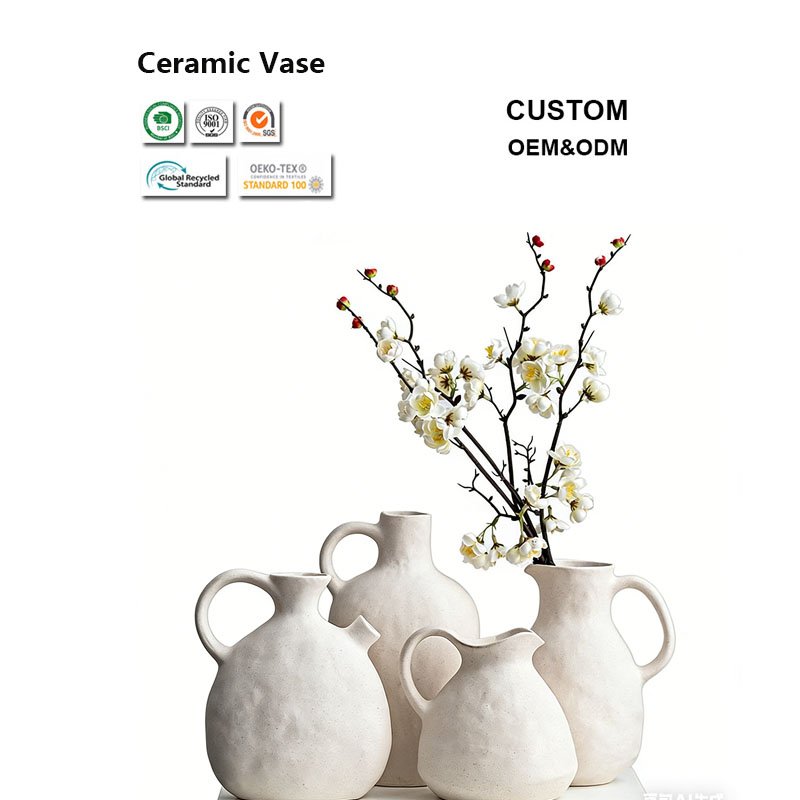
A 500-piece order and a 5,000-piece order for this Japanese-style ceramic vase do not run on the same production path. The 500-piece minimum is fixed at 500 pcs per colour and capacity, with 1,000 pcs required once Pantone matching enters the file. Sampling usually takes 2 rounds before a fired chip is signed, and the step from 500 to 5,000 changes tooling, kiln scheduling and carton planning rather than the clay body itself.
Why the First Sampling Round Rarely Matches the Second
Round 1 is a shape and wall check. The body is stoneware fired at 1180–1220°C, wall 4–7 mm, water absorption below 3%. Round 2 is where colour is judged on a fired chip, not on a screen value. Most buyers approve after 2 rounds; a Pantone match can push to 3 rounds because the glaze shifts between the 1180°C and 1220°C bands. Sampling cost is quoted per round and credited against the 500-piece run when the order confirms.

O que você realmente consegue comprar com 500 peças
At 500 pcs per colour and capacity, the line runs one glaze setup and one kiln cycle per colour. Cartons are 36 or 48 pcs, 0.03–0.04 cbm, and the approved shade reference is written inside each flap so a warehouse can check a delivery without opening a vase. Lead time is 25–32 days after sample approval. The base diameter can still be adjusted to an existing rack pitch before tooling, and the handle opening set between 25 and 32 mm if the format calls for one.
Where 5,000 Pieces Changes the Production Plan
At 5,000 pcs, the constraint moves from glaze setup to kiln time and carton volume. Five thousand units at 36 pcs per carton is 139 cartons; at 48 pcs it is 105 cartons, roughly 4.2–5.6 cbm before pallet allowance. That volume justifies a dedicated firing slot and a second colour run without a separate setup charge per colour. Mixed capacities can load in one container by carton count, which keeps the per-colour glaze cost down. Q4 slots fill 6–8 weeks ahead, so a November promotion needs confirmation by early September.
Sampling Rounds and the Fired Chip Standard
- Round 1: profile, wall thickness, base diameter, 4–7 mm wall check.
- Round 2: fired chip approval at the target temperature band.
- Round 3: only when Pantone matching falls outside the standard glaze range.
Each round ships with a packing list stating carton dimensions and gross weight, so the forwarder can plan loading without re-measuring. Food contact reports for FDA and EU files are issued per lot, not per sample.
Carton Counts and Container Loading at Each Volume
At 500 pcs, one colour fills 11–14 cartons, which rarely fills a container alone. At 5,000 pcs, carton count reaches 105–139, enough to combine 2–3 colours in one load. Packing is quoted with carton dimensions and gross weight per configuration, so the loading plan is fixed before production starts. The carton flap reference stays the same at both volumes, which matters when a repeat order arrives 6 months later.

Lead Time and Slot Booking Above 1,000 Pieces
Below 1,000 pcs, lead time holds at 25–32 days after sample approval. Above 1,000 pcs, the run is booked into a kiln slot and the 25–32 day figure assumes the slot is already reserved. A 5,000-piece order placed in July for a November promotion is realistic; the same order placed in October is not. Confirm the slot before the fired chip is approved, not after.
What to Send With a 500 or 5,000 Piece Enquiry
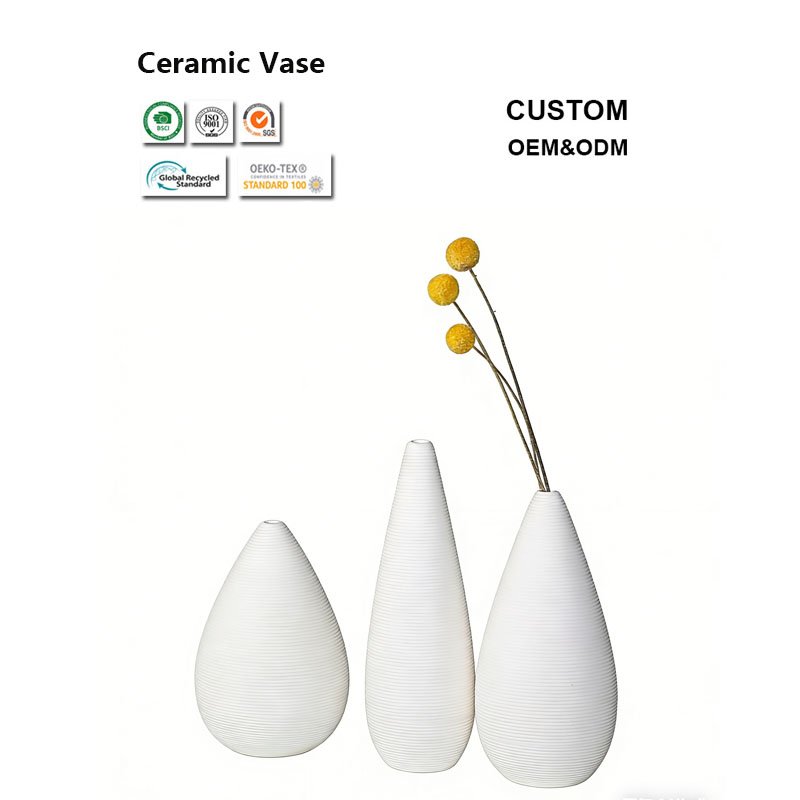
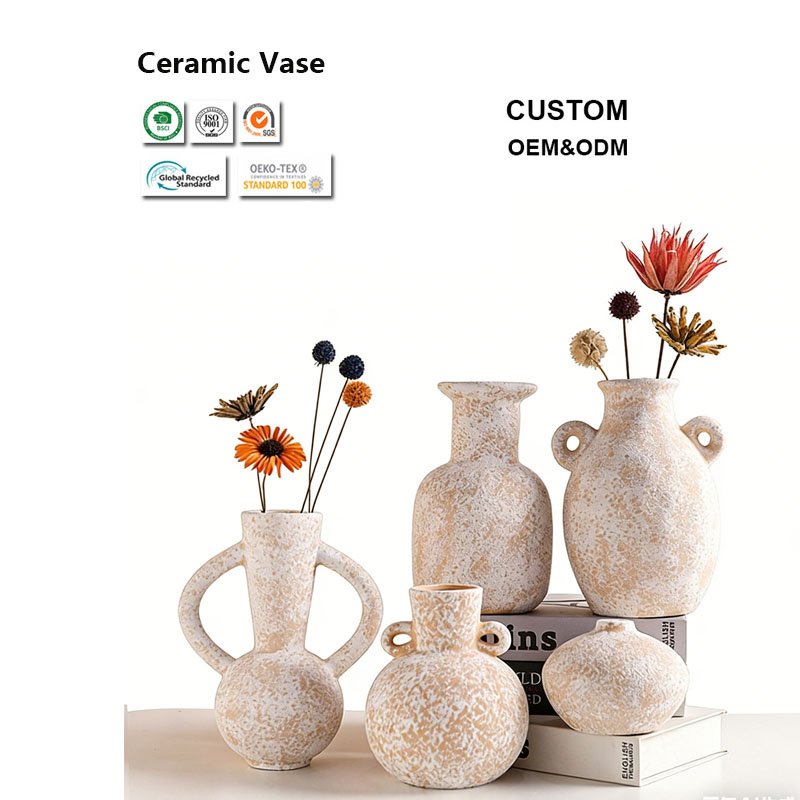
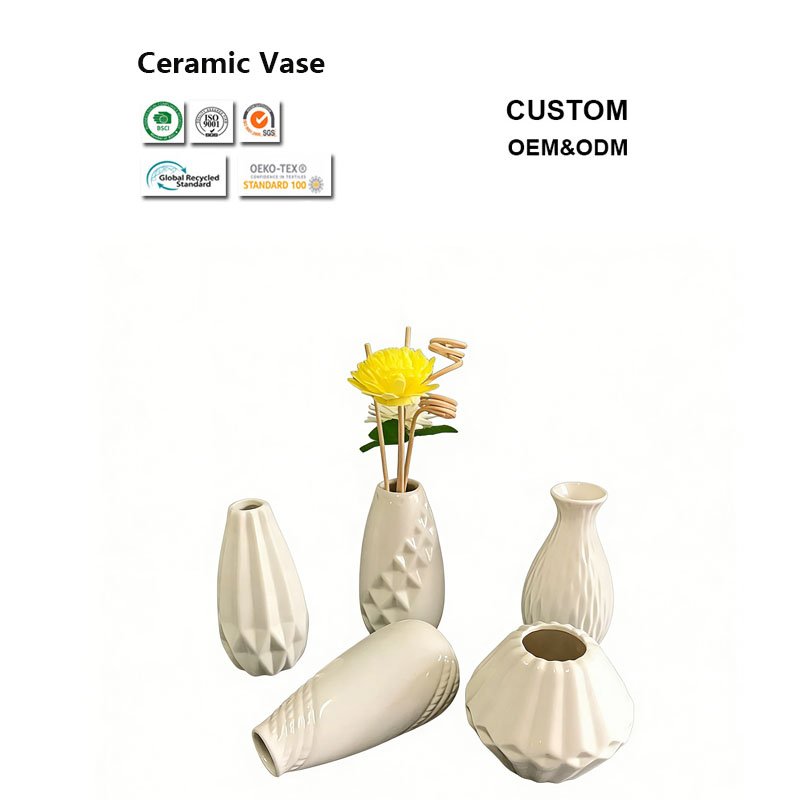
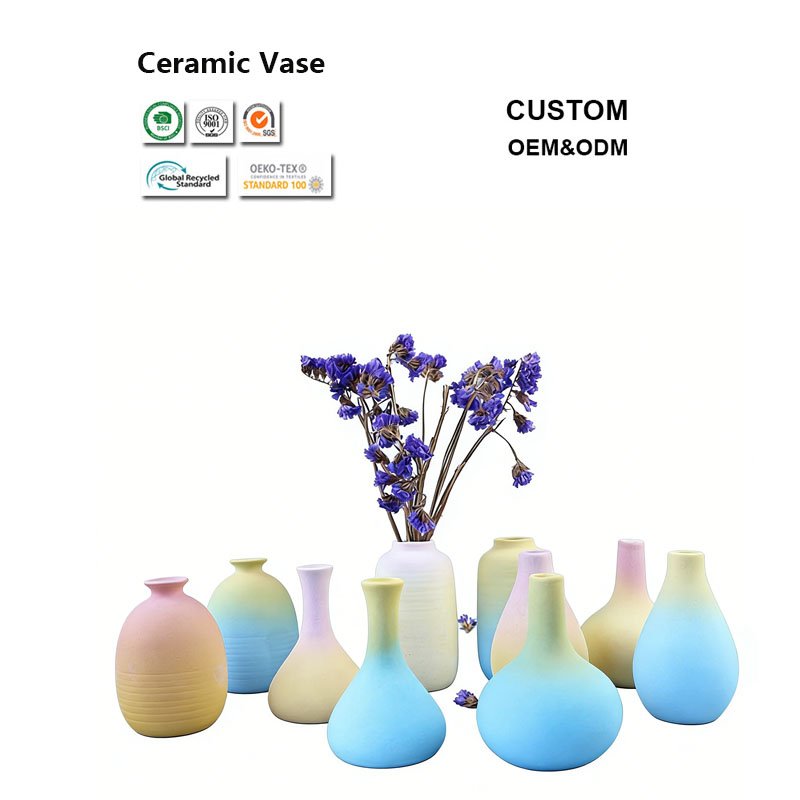
Send the capacity, the colour reference, the target carton count and the delivery month. A 500-piece enquiry needs the fired chip standard; a 5,000-piece enquiry needs the container plan and the slot month. Both need the base diameter and, where relevant, the handle opening between 25 and 32 mm. The 6 gallery images cover the profile from each side, which is enough to start a sampling round without a physical sample.
As opções de tamanho e cor estão na vaso de cerâmica página da categoria, e as etapas de queima e esmaltação por trás desses números são descritas em o passo a passo do processo de fabricação.