






If you are sourcing custom ceramic mugs for your business, understanding MOQ (Minimum Order Quantity) is one of the most important factors. MOQ determines how many units you need to order, affects your per-unit cost, and influences which suppliers you can work with. This guide breaks down everything you need to know about ceramic mug MOQs.
What Is MOQ and Why Does It Matter?
MOQ stands for Minimum Order Quantity — the smallest number of units a factory will produce in a single production run. For custom ceramic mugs, MOQs typically range from 100 to 3,000 units per design, depending on the factory and customization complexity.
MOQ matters because it directly affects your: unit cost (higher MOQ = lower per-unit price), factory selection (low-MOQ suppliers charge more per unit), and inventory risk (higher MOQ = more upfront investment).
Typical MOQs for Ceramic Mugs
| Order Type | Typical MOQ | Per Unit Cost (Est.) |
|---|---|---|
| Stock mugs with print | 100-500 | $1.00-2.50 |
| Custom shape + print | 500-1,000 | $1.50-3.00 |
| Full OEM (shape, glaze, print) | 1,000-3,000 | $1.00-2.00 |
| Sublimation-ready blanks | 500-2,000 | $0.80-1.50 |
How to Find Suppliers with Low MOQ
Not all factories require high MOQs. COMAIN CERAMIC offers flexible MOQs starting at 100-500 units for custom designs. To find low-MOQ suppliers: look for factories that specialize in your mug type, ask about stock mug customization (lower MOQ than full OEM), check if they offer combined orders (mix designs to meet MOQ), and consider sample ordering to test quality before committing to a large MOQ.
Negotiating MOQ with Chinese Suppliers
MOQs are often negotiable, especially if you show commitment. Tips for negotiation: offer to pay a higher per-unit price for a lower MOQ, place a trial order first with a promise of repeat orders, ask if they have stock blanks you can customize (lower MOQ), or combine multiple designs into one production run. Many factories prefer a long-term relationship over a single large order.
MOQ and Your Business Strategy
For startups and small businesses: Look for low-MOQ suppliers (100-500 units) and test the market first. Use higher per-unit cost early on, then scale to larger orders as demand grows. For medium to large businesses: Higher MOQs (1,000+) give you better pricing and more customization options. Consider annual contracts with factories to lock in MOQ flexibility and pricing.
Find the Right MOQ for Your Business
Understanding MOQ helps you choose the right supplier and avoid costly mistakes. Whether you are starting small or scaling up, COMAIN CERAMIC offers flexible MOQ options for custom ceramic mugs. Contact us to discuss your MOQ requirements and get a quote today.
Understanding the Cost Breakdown in Ceramic Mug MOQs
When evaluating MOQ from ceramic mug manufacturers, it helps to understand how factories arrive at their minimum numbers. The MOQ is not arbitrary — it is driven by production economics. For a typical ceramic mug production line, the factory must factor in mold creation costs (typically $500–$2,000 per design), glaze mixing batch sizes, kiln firing cycle capacities, and quality inspection thresholds. Each firing cycle in a tunnel kiln can accommodate a fixed number of mugs; running a partial cycle wastes fuel and labor. This is why small-batch orders carry premium per-unit pricing — the fixed costs of setup and firing are spread across fewer pieces.
For buyers, understanding the factory’s production capacity can help negotiate better terms. If you order during a slow season, factories may accept lower MOQs to keep lines running. Combining multiple mug designs into a single production run — known as mixed MOQ — allows you to meet factory minimums while diversifying your product line. Many experienced importers negotiate a trial MOQ for first-time orders, agreeing to a higher per-unit price in exchange for a lower initial quantity.
MOQ Differences by Mug Type and Decoration Method
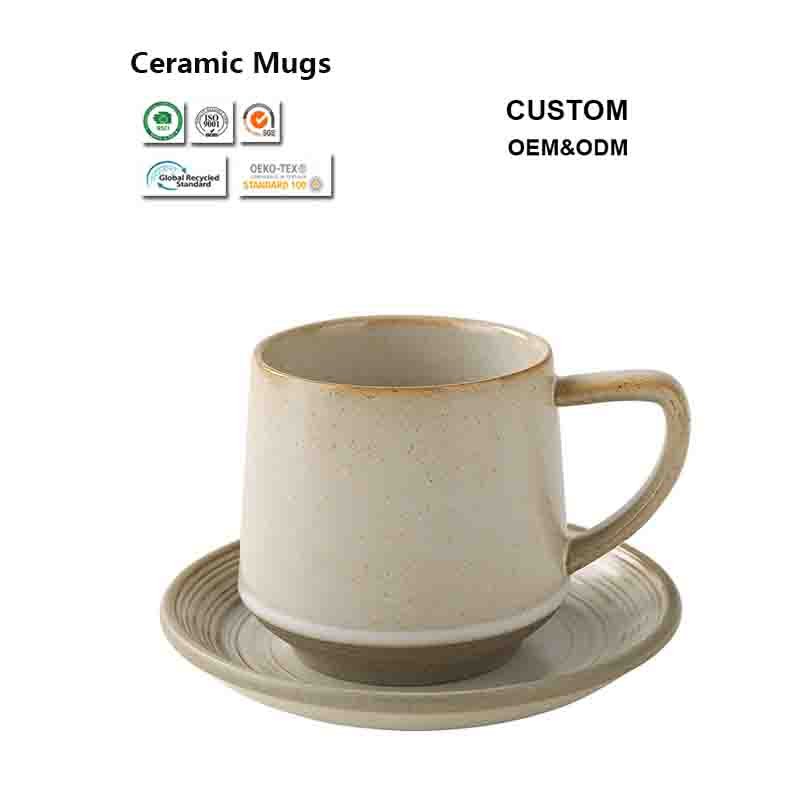
The type of mug and decoration method significantly affect the MOQ. Stock mugs (pre-existing shapes) typically have the lowest MOQ — often 100–300 units — because no new molds are needed. Sublimation-ready blanks follow a similar pattern, as the mug body is already produced. However, custom-shaped mugs requiring new mold creation push MOQs higher, usually 500–1,000 units, because the mold investment must be amortized across the production run.
Decoration methods also influence MOQ. Screen printing and pad printing generally have lower MOQs due to simpler setup. Full-color decal printing (sublimation and heat transfer) sits in the middle range. Hand-painting and specialty glazes demand the highest MOQs, requiring skilled artisan labor and longer timelines. If your brand needs low MOQ for testing, consider starting with a stock shape and basic decoration, scaling to custom shapes once demand is confirmed.
Strategic Approaches to Managing MOQ for Business Growth
Rather than viewing MOQ as a barrier, savvy importers use it strategically. For startups: start with low-MOQ stock mug customization to test the market with minimal risk. Order 100–300 units per design, accepting higher per-unit cost in exchange for flexibility. As sales accumulate, identify best-selling designs and place larger orders to reduce costs. For growing brands: maintain a base collection of stock mugs with low MOQ for consistent reordering, while developing a premium line of custom-shaped mugs with higher MOQ for higher margins.
According to Wikipedia’s article on minimum order quantities, MOQ strategies vary across industries, and understanding the concept helps buyers negotiate effectively. ceramic mug collection offers flexible MOQ options, supporting businesses at different growth stages.
Common MOQ Mistakes to Avoid
When navigating MOQ requirements for custom ceramic mugs, several common mistakes can cost buyers time and money. One frequent error is assuming that a higher MOQ always means better value. While per-unit costs decrease at higher volumes, the total inventory cost may outweigh savings if products don’t sell as expected. Another mistake is not factoring in sample costs and mold amortization into per-unit calculations, especially for full OEM orders where mold creation fees can significantly impact the true cost per mug.
A third mistake is committing to a large MOQ with an untested supplier before verifying quality through samples or a pilot order. Always order samples first, evaluate quality, and place a small initial order before scaling up. ceramic mug collection offers sample ordering and flexible MOQ tiers to help buyers avoid these pitfalls, ensuring a smoother sourcing experience from the very first order.
For more information, visit SGS ceramic product testing.