







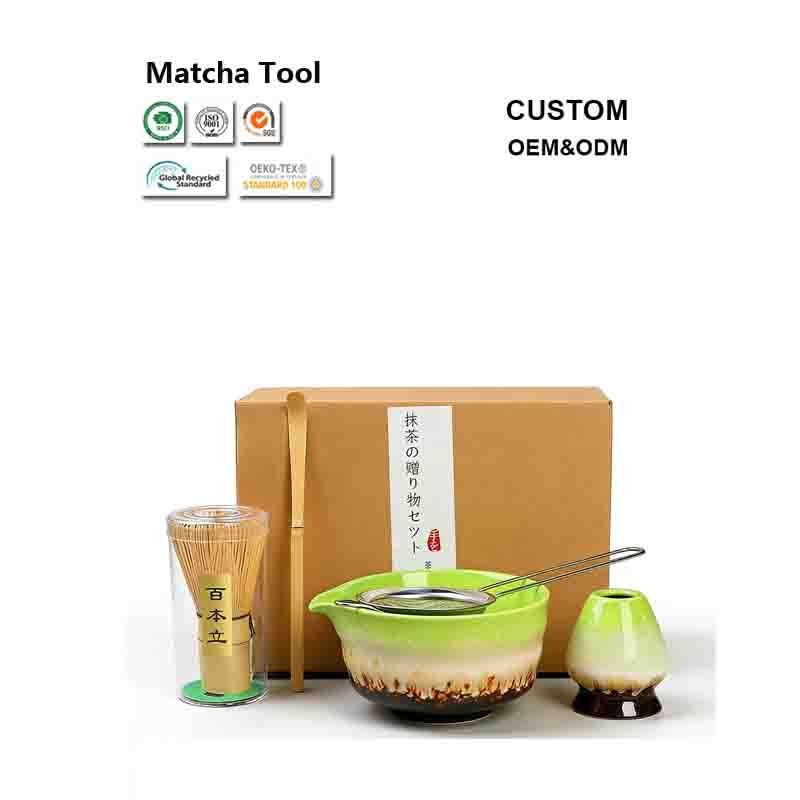

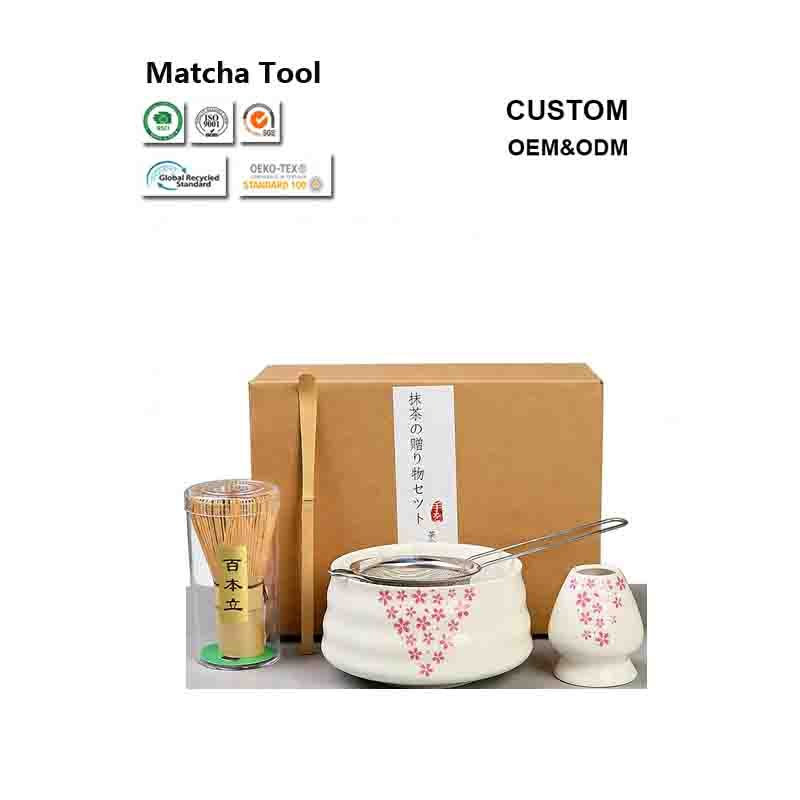


A 450–500 ml matcha bowl ships inside a retail box with a whisk, scoop and stand, and the carton holds 20–24 sets at 0.05–0.06 cbm. Export packing decides whether the bowl reaches the shelf intact. This page covers carton drop testing, the reject allowance per lot, and the packing steps that keep breakage inside the agreed figure.
Why the Bowl Sets the Packing Budget
The whisk, scoop and stand can be replaced from stock. The bowl cannot: it carries the glaze, the rim profile and the polished interior curve, and a hairline crack at the rim ends the set. Glaze thickness runs 0.25–0.35 mm on the interior, so the wall is thin enough that a corner impact travels. Packing cost is therefore calculated around one piece, and the insert is designed before the carton is chosen.

Carton Build for 20–24 Sets
Each set sits in a pulp insert moulded to the bowl diameter, with the bowl face down and the foot ring taking the load. The whisk travels in its own sleeve so the 80 or 100 prongs never press against the interior wall. The scoop and stand fill the remaining cavities. The master carton is double-wall, and the void between inserts is filled rather than left open, because an empty gap lets sets shift during the 1.2 m drop.
- Bowl: pulp insert, face down, foot ring loaded
- Whisk: separate sleeve, tines free
- Scoop and stand: side cavities
- Master carton: double-wall, 20–24 sets, 0.05–0.06 cbm
The 1.2 m Drop Test, Step by Step
Sets are dropped at 1.2 m in the retail box, then again inside the master carton, on the corner, edge and face. Each orientation gets 3 drops, so 9 drops per carton, on 3 cartons from the lot. After each drop the box is opened and every bowl is checked for rim chips, foot cracks and glaze crazing under light. A set passes only if the bowl, whisk and stand are all usable. Results are photographed and dated, and the photos travel with the shipment documents.
Definição da margem de rejeição
The reject allowance is written into the order before production: 2% on bowls, 1% on whisks, counted per carton rather than per lot. A 500-set order therefore carries 10 spare bowls and 5 spare whisks, packed in the last carton. Breakage found at the drop test is charged to that allowance, not added to the invoice. If a lot exceeds 2%, the line stops and the insert is re-cut before the next carton is packed.
Packing Changes That Move the Price
Bowl colour matching, a logo on the bowl base and on the box, and kit composition are the change points on this line. Dropping the scoop rest or the stand is the usual way to reach a lower retail price without touching the bowl. Either change alters the insert cavity, so the drop test is repeated on the revised carton. MOQ is 300–500 sets depending on composition, and lead time is 28–32 days after sample approval.

What the Buyer Receives With the Carton
Every shipment includes the drop test record, the insert drawing, the carton marking layout and the spare-piece count. The retail box carries the 6 gallery images of the bowl profile from each side, so the buyer can match the delivered piece to the approved sample without opening every set. Reorders use the same insert drawing number, which keeps the packing identical run to run.
As opções de tamanho e cor estão na caneca de cerâmica página da categoria, e as etapas de queima e esmaltação por trás desses números são descritas em o passo a passo do processo de fabricação.